|
Early bird registration for Reggae Marathon extended
THE LOCAL early bird registration date for the 2019 Reggae Marathon, Half Marathon, and 10K has been extended by one month to August 31, 2019. Registration remains open at www.reggaemarathon.com
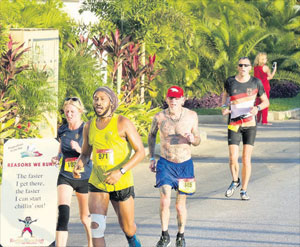
Reggae Marathon, Half Marathon and 10K is set for December 8, 2019, in Negril and continues to attract runners and walkers from across Jamaica and over 38 different countries. The internationally certified event is in its 19th year and continues to grow. Registration for the event includes bib-tag timing, a commemorative runner shirt, and a gym sack, as well as a specially designed 2019 finisher’s medal.
According to Diane Ellis, sponsorship director of Reggae Marathon, the team took the decision to allow potential participants in this year’s event more time to take advantage of the discounted rate.
“The number of races on the island continues to grow, with an average of two road races per month held so far this year. Repeat participants in most of the races tend to respond to the next event and may need to be reminded that they can gain from registering early for the last local race of the year,” Ellis explained.
One of the highlights of this year’s Reggae Marathon, Half Marathon, and 10K is the fact that the race has joined four other Caribbean marathons to form the Five Island Challenge, sponsored by the Atlanta Life Insurance Company of the USA.
The other marathons are Marathon Bahamas Race Weekend, Run Barbados Marathon Weekend, Bermuda International Race Weekend, and Cayman Islands Marathon & Half Marathon Relay.
The organisers of the Five Island Challenge, the CES Corporation, said the new challenge is to encourage distance runners from across the world to thread their way through the palm trees and beaches of the various islands while enjoying a fun ‘runcation’.
“We at Reggae Marathon are excited to be a part of this challenge as it is bringing a welcome synergy to regional marathon events and competitiveness,” said Alfred ‘Frano’ Francis, race director of Reggae Marathon.
To successfully complete the challenge, runners must finish each of the five marathons and/or half-marathons within a three-year period, starting with the December 2019 races, of which Reggae Marathon, Half Marathon, and 10K is one. Past participation in any of the events also qualifies as some of the marathon events will be held on overlapping dates.
Once the series has been completed, runners will receive a special finisher’s medal.
For more information on the early bird rate and the Five Island Challenge visit www.reggaemarathon.com.
|